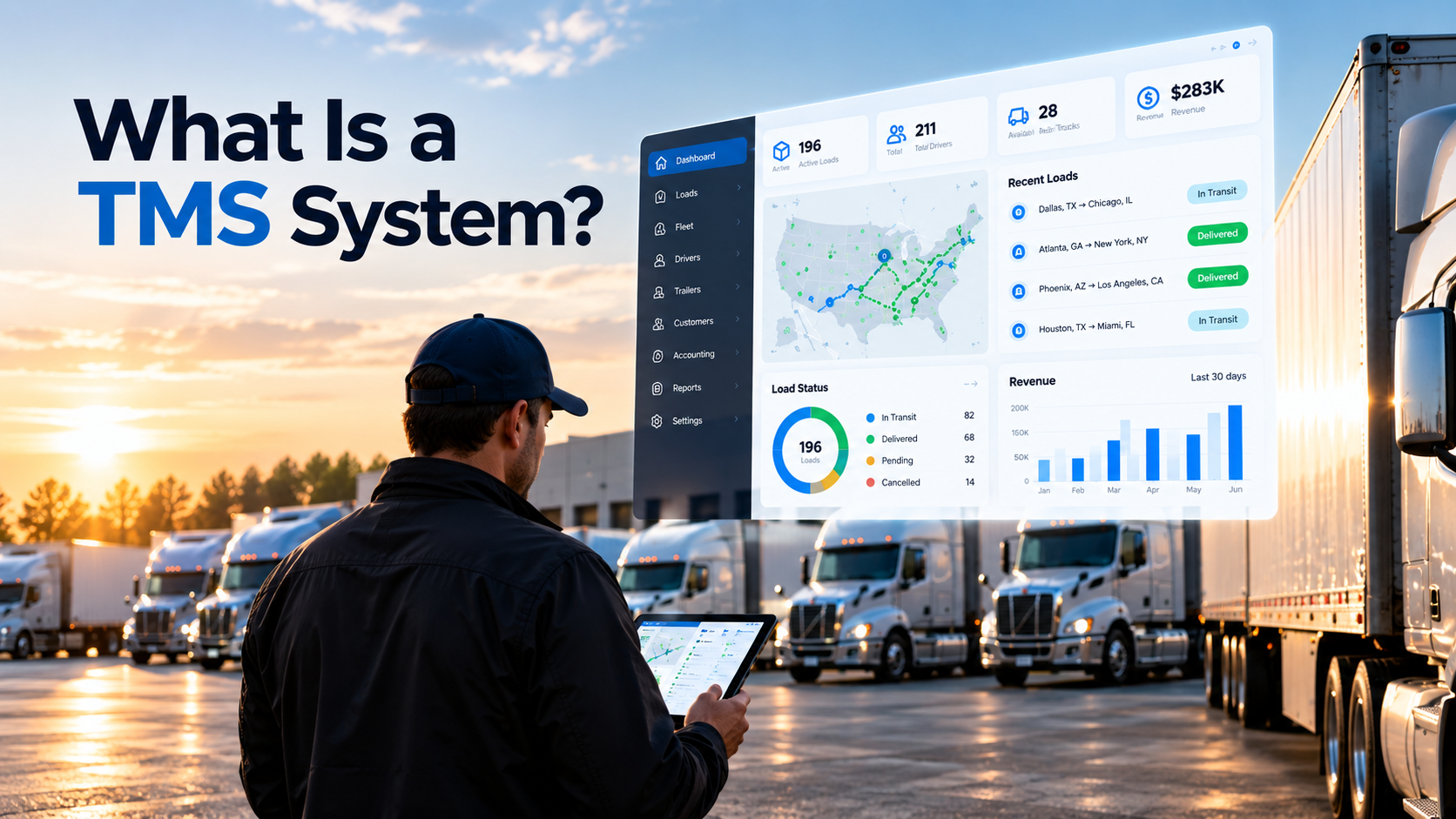
Running a trucking company means managing many moving parts at the same time. Loads, drivers, trucks, trailers, contracts, accounting and communications all have to work together to keep daily operations running smoothly.
As a trucking company grows, managing these activities through spreadsheets, emails and disconnected tools can become difficult.
A TMS system, or Transportation Management System, helps bring transportation operations together in one connected software platform.
A TMS can help trucking companies organize transportation workflows, improve visibility and reduce manual administrative work.
What Does TMS Stand For?
TMS stands for Transportation Management System.
A Transportation Management System is software designed to help businesses plan, manage and monitor transportation operations.
For trucking companies, a TMS can support areas such as:
- Load and trip management
- Fleet operations
- Trucks and drivers
- Trailers and equipment
- Contracts
- Accounting
- Team management
- Communications
- Integrations
- Operational reporting
The exact capabilities depend on the TMS platform.
How Does a TMS System Work?
A TMS connects different parts of a transportation operation within one system.
For example, a trucking company may need to:
- Manage incoming loads
- Organize trips
- Assign drivers and equipment
- Track trucks and trailers
- Manage contracts and operational information
- Coordinate team communications
- Connect operational information with accounting
- Review business and fleet activity
Without a centralized system, these activities can end up being managed through multiple spreadsheets, emails and applications.
A TMS creates a more structured environment where transportation teams can manage these workflows from one platform.
What Does a TMS System Do for a Trucking Company?
A TMS can support different parts of a trucking company's daily operation.
Fleet Management
A centralized fleet overview can give teams a clearer picture of trucks, units and other fleet information.
Loads & Trips
Load and trip management helps organize transportation activity and keep important information connected to the operation.
Trucks, Units & Drivers
Managing trucks, units and drivers together helps teams connect people and equipment with daily transportation workflows.
Trailers
Trailer information can be managed alongside other fleet and transportation data.
Contracts
A TMS can help organize contracts and related operational information within the same business environment.
Members
Team members can access the platform based on their responsibilities and permissions.
Accounting
Connecting accounting with transportation operations can help reduce the separation between operational and financial information.
Communications
Modern trucking operations depend on constant communication. LoadUp360 connects communications with tools such as Gmail, RingCentral and Telegram, helping teams keep important communication channels closer to their operational workflows.
Benefits of Using a TMS System
The benefits of a TMS depend on the company's size, workflows and requirements. However, transportation companies commonly use TMS platforms to improve organization, visibility and efficiency.
Centralized Information
Instead of managing information across multiple files and applications, teams can work from one centralized platform.
Better Operational Visibility
A connected TMS can make it easier for managers and operations teams to see what is happening across their transportation operation.
Less Manual Work
Moving information between spreadsheets, emails and different systems can create unnecessary administrative work.
A TMS can help create more structured and connected workflows.
Connected Operations
Loads, drivers, trucks, trailers, contracts and accounting are all connected to the same transportation operation.
A TMS can bring these workflows together instead of treating them as completely separate processes.
Support for Growth
As a trucking company adds trucks, drivers, loads and team members, managing operations manually can become increasingly complex.
A centralized TMS can provide a more structured foundation for growing operations.
TMS System vs. Spreadsheets
Spreadsheets can be useful for simple tracking and smaller operations.
However, as a trucking company grows, spreadsheets can become difficult to maintain across multiple users, vehicles, drivers and loads.
A TMS is specifically designed around transportation workflows.
| Spreadsheets | TMS System |
|---|---|
| General-purpose tool | Built around transportation workflows |
| Manual updates | Connected workflows |
| Information across separate files | Centralized information |
| Limited operational visibility | Designed for operational visibility |
| More manual coordination | Structured workflows |
| Can become difficult to scale | Designed to support growing operations |
Want to compare the two in more detail?
TMS vs Spreadsheet: Which Is Better for a Trucking Company?
Who Should Use a TMS System?
A TMS can be useful for different types of transportation operations, including:
- Trucking companies
- Motor carriers
- Small and growing fleets
- Transportation companies
- Operations managing multiple drivers
- Fleets managing multiple trucks and trailers
- Companies looking to connect transportation and accounting workflows
The right TMS depends on the company's operational complexity, budget, fleet size and required functionality.
What Should You Look for in a TMS?
Choosing a TMS should start with your company's actual operational requirements.
Fleet Management
Can the system manage trucks, units, drivers and trailers?
Load Management
Can your team organize loads and trips efficiently?
Accounting
Can operational and financial workflows work together?
Communications
Can important communication channels be connected to daily operations?
Integrations
Can the TMS work with the other tools your company already uses?
Ease of Use
Can dispatchers, fleet managers and other employees use the system efficiently?
Implementation
How quickly can your company implement the system, and what support is available?
The goal is not simply to find the TMS with the longest feature list.
The goal is to find a system that fits the way your trucking company actually operates.
TMS Software vs. TMS System: What's the Difference?
You will often see the terms TMS system and TMS software used when researching transportation technology.
They generally refer to the same category of technology.
TMS stands for Transportation Management System, while TMS software refers to the software used to operate and manage that system.
You may also see terms such as:
- Transportation management software
- Trucking TMS
- TMS platform
- Trucking management software
- Transportation Management System
Different companies may use different terminology, but the underlying concept is similar: using software to manage transportation operations.
How LoadUp360 Helps Trucking Companies
LoadUp360 is a transportation management platform built for U.S. trucking operations.
The platform brings multiple operational workflows together:
Fleet Overview → Loads & Trips → Trucks / Units / Drivers → Trailers → Contracts → Members → Accounting → Communications
Instead of managing different parts of the operation across disconnected tools, trucking teams can use one connected platform.
Explore LoadUp360
Learn more about our TMS for trucking companies.
Frequently Asked Questions
What is a TMS system?
A TMS system is a Transportation Management System used to organize and manage transportation operations.
What does TMS stand for?
TMS stands for Transportation Management System.
What does a TMS do for a trucking company?
A TMS can help trucking companies manage loads, trips, fleet information, drivers, trucks, trailers, contracts, accounting and other transportation workflows.
Can a TMS replace spreadsheets?
Depending on the company's workflows and the TMS capabilities, a TMS can replace many spreadsheet-based operational processes and provide a more centralized system.
For a detailed comparison, read: TMS vs Spreadsheet: Which Is Better for a Trucking Company?
Is TMS software only for large trucking companies?
No. TMS platforms can support trucking companies of different sizes. The right solution depends on the company's operational needs and complexity.
How much does TMS software cost?
TMS pricing varies depending on the provider, features, fleet size, users, integrations and implementation requirements.
Conclusion
A TMS system gives trucking companies a centralized way to manage transportation operations.
Instead of relying on disconnected spreadsheets, emails and tools, companies can use a TMS to connect important workflows such as loads, trips, drivers, trucks, trailers, contracts, accounting and communications.
For growing trucking companies, the right TMS can provide a more organized and connected foundation for daily operations.
LoadUp360 brings these core trucking workflows together in one connected transportation management platform.